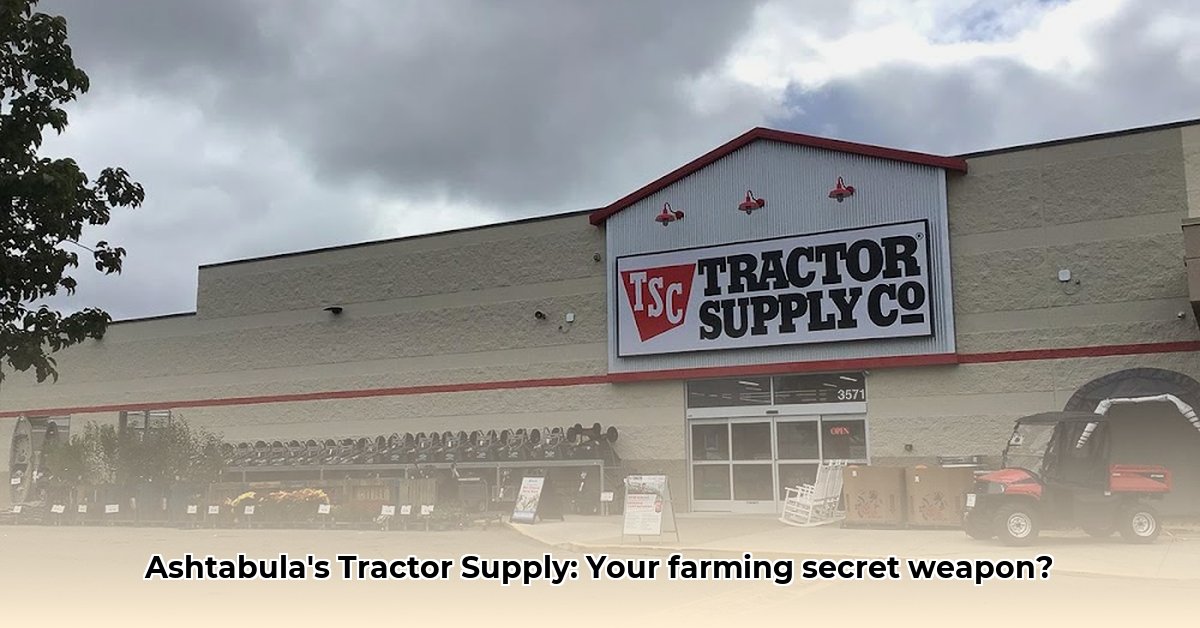
Tractor Supply in Ashtabula, Ohio, serves as a crucial resource for the local agricultural community, providing essential supplies for both large-scale farming and home gardening. This article explores Tractor Supply's role in supporting local agriculture, examines its sustainability practices, and proposes actionable steps to enhance environmental responsibility within the community. We'll uncover what's readily available, pinpoint information gaps, and outline a pathway towards a more sustainable future for Ashtabula's farming landscape. For similar stores in other areas, check out this example.
Product Offering and Accessibility
Tractor Supply Ashtabula offers a broad range of products catering to diverse agricultural needs. From seeds and fertilizers to tools and animal feed, the store acts as a one-stop shop, reducing the need for multiple trips to different retailers. This centralized model translates to decreased transportation emissions, benefiting both individual consumers and the environment as a whole. Isn't convenience a significant factor when considering environmental impact? The reduced fuel consumption stemming from consolidated shopping directly contributes to a smaller carbon footprint, a considerable advantage in the pursuit of sustainable practices.
Sustainability Assessment: A Call for Transparency
While the accessibility of Tractor Supply's products arguably promotes sustainable farming by reducing transportation emissions, a comprehensive evaluation of their overall sustainability remains incomplete due to a lack of publicly available information. The store's product offerings are extensive and readily available, but crucial details surrounding sustainable sourcing, waste management practices, and the overall environmental footprint of their operations are missing. This lack of transparency hinders consumers' ability to make truly informed and ethical purchasing decisions. How can we support environmentally responsible practices if we lack the data to assess their effectiveness?
Actionable Recommendations: A Collaborative Approach
To promote sustainability, collaborative efforts are vital. The following recommendations are tailored to different stakeholders, outlining both short-term and long-term goals.
Tractor Supply Company:
- Conduct a comprehensive sustainability audit: (0-1 year) Assess the entire supply chain, from product sourcing to operational processes, to quantify the environmental impact of their operations.
- Develop a transparent sustainability strategy: (3-5 years) Create a detailed plan outlining goals for eco-friendly sourcing, waste reduction, and community engagement. This plan should be publicly accessible and regularly updated.
- Publicly report on progress: (Ongoing) Regularly communicate their sustainability achievements and challenges to the community, fostering accountability and transparency.
Farmers and Gardeners:
- Optimize resource utilization: (Immediate) Implement efficient farming and gardening practices to minimize waste and maximize resource utilization.
- Advocate for sustainable products: (Ongoing) Request a wider selection of eco-friendly products, and provide feedback to Tractor Supply regarding their needs and preferences.
- Share best practices: (Ongoing) Collaborate and share sustainable farming techniques within the community to foster collective progress.
Local Government:
- Partner with Tractor Supply on sustainability initiatives: (Short-term) Collaborate on programs promoting sustainable agriculture and environmental awareness.
- Implement incentives for sustainable farming: (Long-term) Offer financial or other incentives to encourage the adoption of eco-friendly practices among local farmers.
- Strengthen local food systems: (Long-term) Develop infrastructure and programs supporting local food production and distribution.
Consumers:
- Prioritize sustainable purchases: (Immediate) Actively seek out and choose environmentally friendly products whenever possible from Tractor Supply and other retailers.
- Engage directly with Tractor Supply: (Ongoing) Contact Tractor Supply to express support for sustainable practices and request greater transparency.
- Support local organizations: (Ongoing) Support community groups dedicated to promoting sustainable agriculture and environmental protection.
Conclusion: A Collective Commitment
A sustainable agricultural future in Ashtabula requires a collaborative effort. Tractor Supply, as a key local resource, has a significant role to play in fostering sustainable practices. By demanding transparency, engaging in open dialogue, and working together, we can collectively build a more environmentally conscious and thriving agricultural community in Ashtabula County and beyond.